





Online encyclopedia of dental trauma

Online encyclopedia of dental trauma

عن الكورس
كورس Paul V. Abbott عن إصابات الأسنان، محاضرات منظمة ومبنية على البحث العلمي ويه حالات واضحة. يعطيك بروتوكولات التشخيص والإسعاف والعلاج.
مناسب لـ: طبيب الأسنان العام وأخصائي علاج الجذور وطبيب أسنان الأطفال
شنو راح تتعلم:
- تشخيص الـ Dental Trauma وفحص حيوية اللب
- الإسعاف للكسور والـ Luxation والـ Avulsion
- تشخيص وعلاج الـ Resorption الداخلي والخارجي
- علاج الأسنان غير مكتملة النمو والحفاظ على اللب
Online encyclopedia of dental trauma
Course overview
Paul Abbott's course on dental trauma is a set of structured lectures filled with scientifically based information with a demonstration of vivid clinical cases.
You will receive diagnostic protocols, first aid and treatment of dental trauma and soft tissue injuries.
You will also learn:
The reaction of teeth and oral tissues to injury
Protocols for the diagnosis and treatment of external and internal resorption
General principles of treatment of dental and oral tissue injuries
The use of local and systemic medications
Principles of emergency care for various injuries of the maxillofacial region.
- Implement diagnostic protocols for dental trauma including pulp sensibility testing and radiographic assessment.
- Apply emergency management steps for common dental injuries: fractures, luxations, intrusion and avulsion.
- Identify and differentiate types of tooth resorption to guide preventive and interceptive management.
- Plan treatment strategies for traumatised immature teeth prioritizing pulp preservation and appropriate interventions.
What you will learn
Course lessons
Lesson 1. What Happens When Following Dental and Oral Injuries. Introductory lesson
A. Responses of the Dental and Oral Tissues to Injury
B. Factors Affecting Healing of the Dental and Oral Tissues following Trauma
Common dental and oral traumatic injuries
Potential consequences of the various injuries to the teeth and oral tissues including the long-term prognosis for each tissue
Different healing responses of the pulp, peri-radicular and soft tissues following trauma
Factors that affect the healing of these tissues following trauma
Management plans to minimise the consequences of trauma to the teeth.
Lesson 2. What Happens When Following Dental and Oral Injuries
A. Responses of the Dental and Oral Tissues to Injury
B. Factors Affecting Healing of the Dental and Oral Tissues following Trauma
Common dental and oral traumatic injuries
Potential consequences of the various injuries to the teeth and oral tissues including the long-term prognosis for each tissue
Different healing responses of the pulp, peri-radicular and soft tissues following trauma
Factors that affect the healing of these tissues following trauma
Management plans to minimise the consequences of trauma to the teeth.
Lesson 3. Tooth Resorption and Dental Trauma
A. General Principles and Classification of Resorption
B. External Surface Resorption
C. Ankylosis
D. External Replacement Resorption
E. External Inflammatory Resorption – Part 1
Different types of external tooth resorption that are associated with trauma to the teeth
Pathogenesis of the different types of external tooth resorption related to trauma
Factors that predispose teeth to external tooth resorption during and after trauma to the tooth
Ankylosis and its relationship to trauma and the different types of external resorption
Diagnosis and management of external surface resorption
Difference between external replacement resorption and external inflammatory resorption
Diagnosis and management of external replacement resorption
Strategies to reduce the chances of external replacement resorption occurring following trauma to a tooth.
Lesson 4. External Inflammatory Resorption
A. Preventive Management
B. Interceptive Management
Pathogenesis of external inflammatory resorption related to trauma
Pathogenesis of external inflammatory resorption when related to long-standing infected root canal systems
Diagnosis and management of external inflammatory resorption
Strategies to prevent external inflammatory resorption following specific injuries to the teeth, including when root canal treatment should be commenced
Strategies to manage external inflammatory resorption when it is already present - i.e. the interceptive management of this resorption
Long-term prognosis of teeth that have had external inflammatory resorption.
Lesson 5. General Principles for Managing Traumatic Dental Injuries
General principles for managing trauma to the teeth and oral tissues
Key elements of the examination and assessment of patients following trauma to the teeth and oral region
Importance of pulp sensibility tests and radiographs following trauma to the teeth
Different types of splints used to stabilize the teeth and the alveolar bone following trauma
Indications for the use of the different types of splints and their duration of use
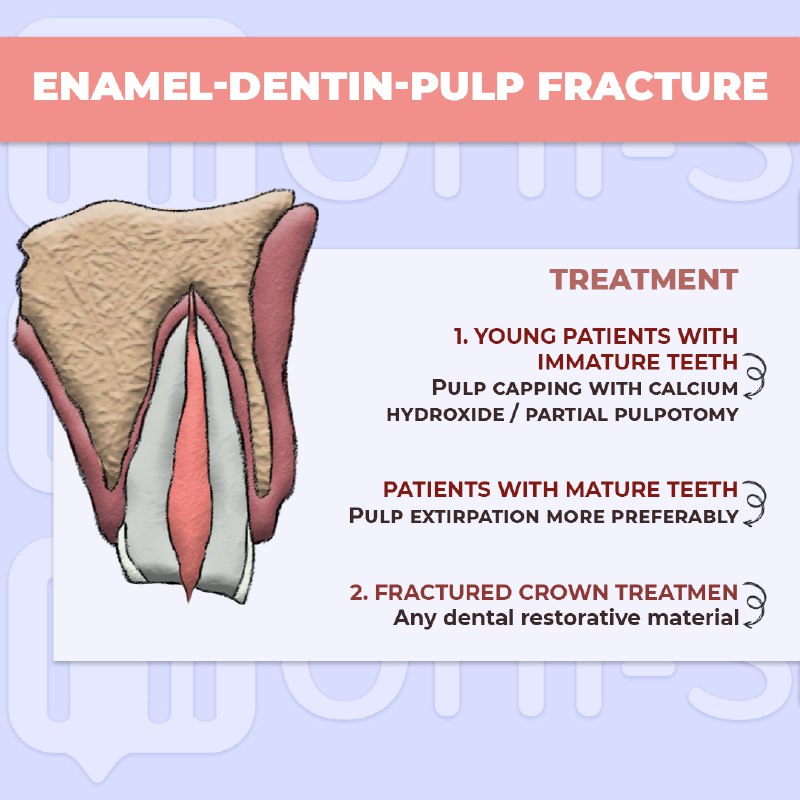
Options available for emergency management of pulp exposures, especially with a view to preservation of the pulp
Management of post-operative discomfort/pain following the initial management of traumatic dental injuries
The use of systemic and local medications following trauma to the teeth and oral region
The importance of, and the need for, follow-ups for patients who have had trauma to the teeth and oral region
The follow-up schedule following trauma to the teeth and oral region.
Lesson 6. Emergency Management of Specific Traumatic Dental Injuries
A. Fractures: Crown fractures, Crown-root fractures
B. Concussion and Subluxation
C. Extrusion and Lateral Luxation
D. Intrusion and Avulsion
The emergency management of specific injuries to the teeth and oral tissues
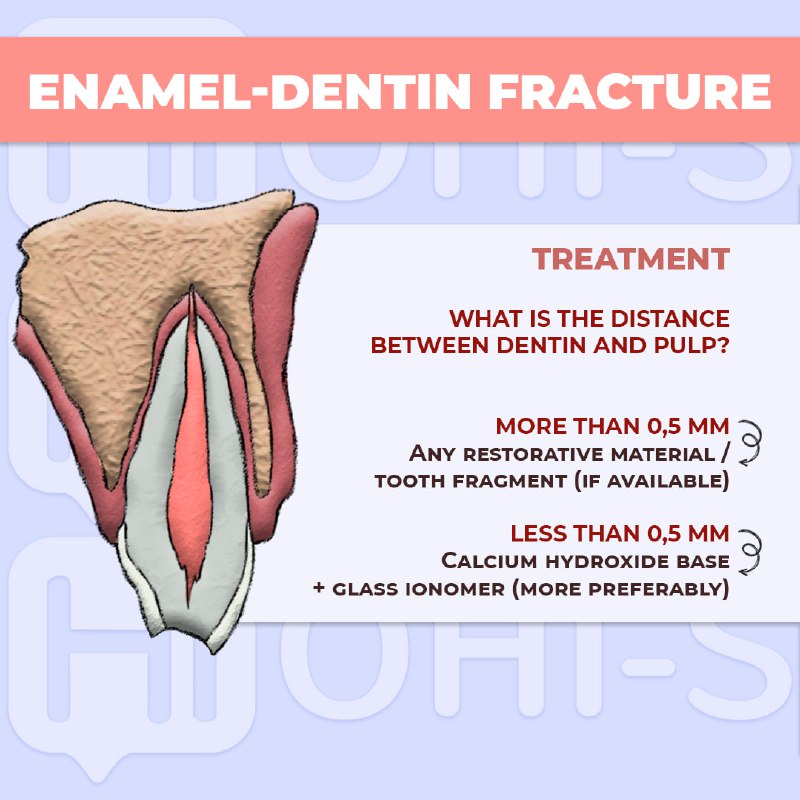
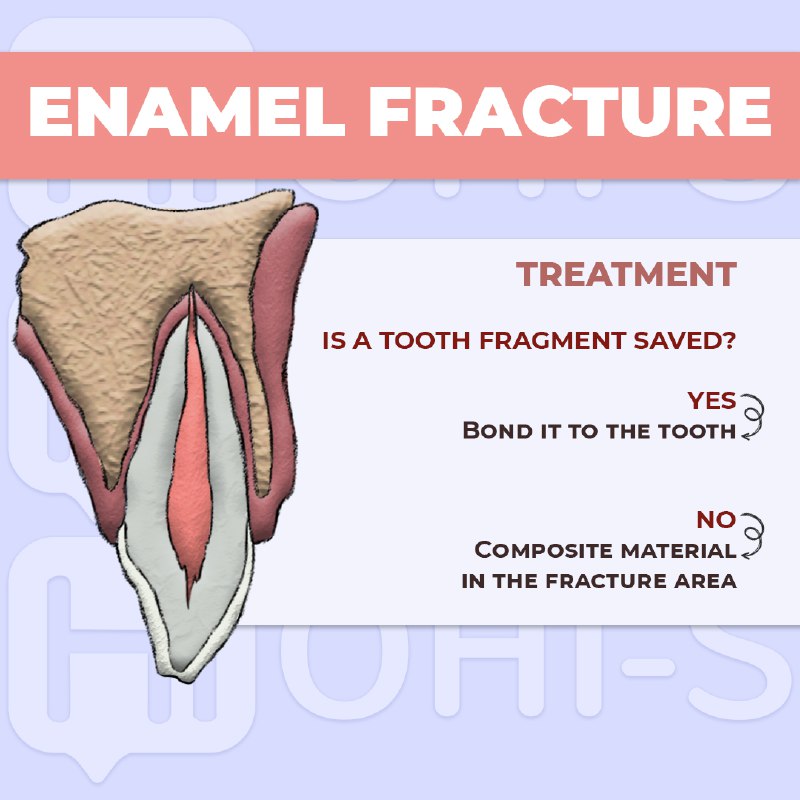
Management of crown and crown-root fractures in the emergency situation
Management of tooth concussion and subluxation injuries
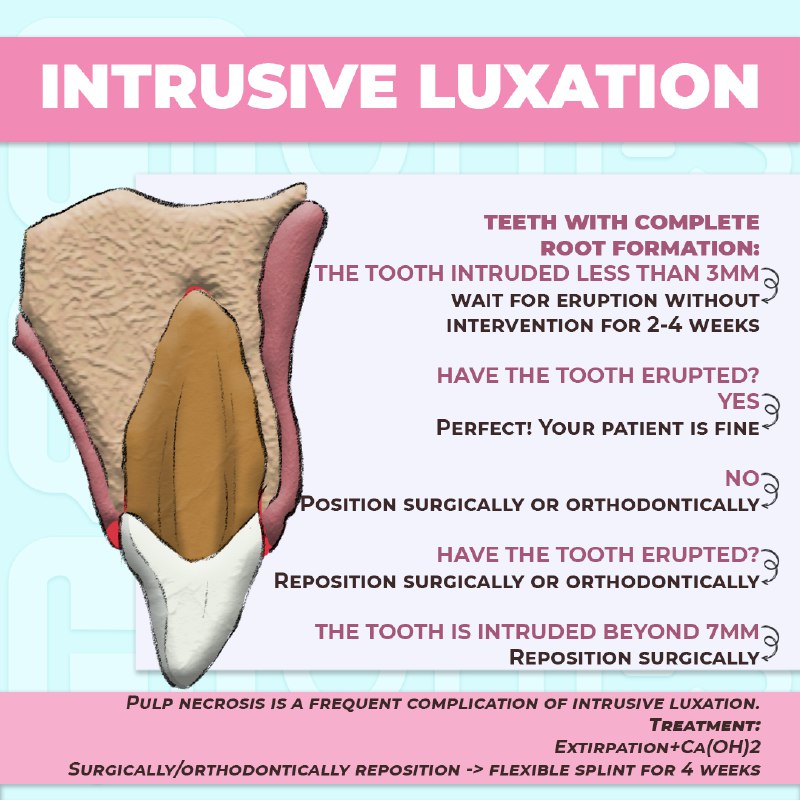
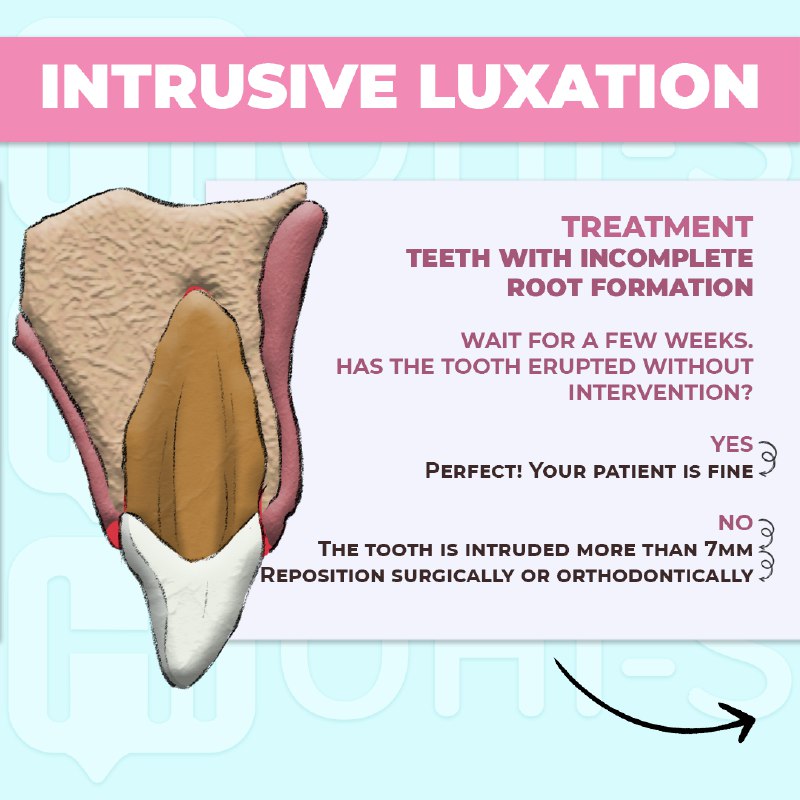
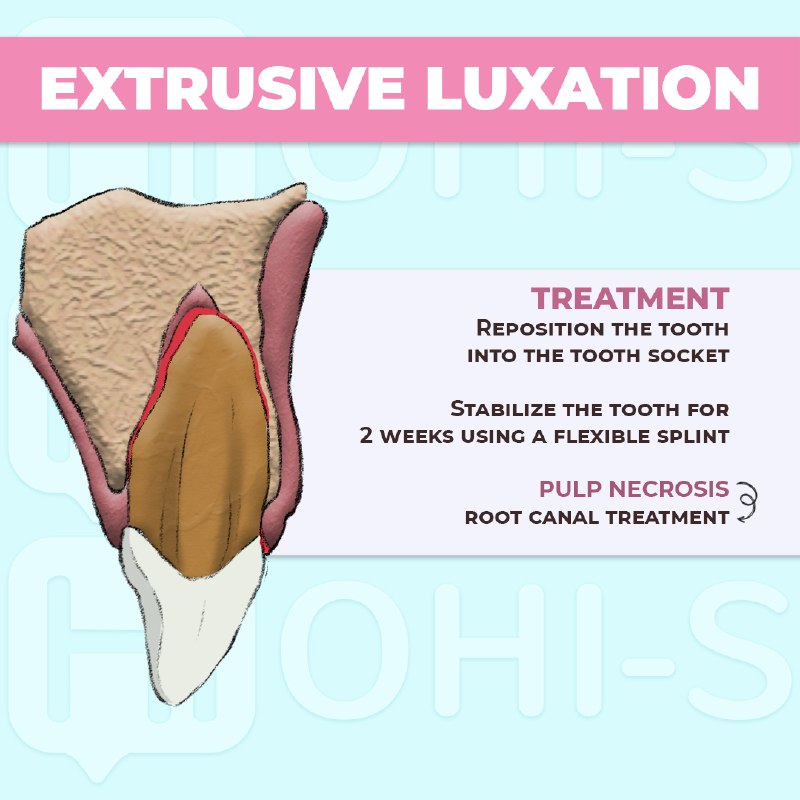
Methods to reposition teeth that have been extruded, laterally luxated and intruded
The emergency management of teeth following extrusion and lateral luxation
The options for management of intruded teeth in the emergency setting along with the advantages and disadvantages of each option
The emergency management of avulsed teeth
The medium-term and long-term follow-up management for these injuries
Prognosis for teeth following each of the above injuries.
Lesson 7. Assessment and Management of Transverse Root Fractures
New classification for transverse root fractures
Various responses to transverse root fractures
Prognosis for teeth following transverse root fractures according to the position of the fracture
The immediate management of teeth that have had a transverse root fracture
The endodontic management protocols for teeth that develop pulp necrosis and infection of the root canal system following a transverse root fracture.
Lesson 8. Management of Incompletely Developed Teeth
Importance of pulp preservation in teeth with incompletely developed roots
The situations where immature teeth may become pulpless and infected
Three management options for pulpless, infected immature teeth
Advantages and disadvantages of the three management options for pulpless, infected immature teeth
Healing responses following treatment with the three options.
Whether calcium hydroxide has any detrimental effects on tooth strength
Appropriate management option for the various situations where immature teeth have become pulpless and infected
Treatment outcomes and prognosis for teeth treated via the three management options for immature teeth, especially the longer-term prognosis.
Lesson 9. Assessment and management of Internal Resorption of Teeth
Three types of internal resorption of teeth
Aetiology and pathogenesis of the different types of internal resorption
How to differentially diagnose the three types of internal resorption
Management of each type of internal resorption
Outcomes of treatment of internal inflammatory resorption
Prognosis for teeth with each type of internal resorption.
أسئلة شائعة عن الكورس
من محاضر الكورس؟
الكورس مقدم من: Paul V. Abbott
كم مدة الكورس وكم درس فيه؟
الكورس يتكون من 9 درس، ومدته الكلية 10 ساعة و53 دقيقة.
هل الكورس كامل أو مجرد فيديوهات من يوتيوب؟
الكورس اشتراك كامل بكل الدروس المذكورة بالوصف (9 درس)، وليس فيديوهات يوتيوب أو مقاطع متفرقة.
متى يتفعّل الكورس بعد الدفع؟
التفعيل فوري خلال دقائق من إتمام الدفع في أغلب الحالات، وتوصلك رسالة على البريد الإلكتروني بكل تفاصيل التفعيل.
ما هي طرق الدفع المتوفرة؟
للأطباء داخل العراق: زين كاش، سوبر كي (ماستر الرافدين)، FIB أو رصيد آسيا سيل.
للأطباء خارج العراق: البطاقة البنكية، أو طرق دفع محلية في بعض الدول مثل مصر والجزائر وفلسطين وغيرها.
هل الدفع آمن؟
نعم، جميع عمليات الدفع محمية عبر بروتوكولات أمان SSL.
إذا صارت عندي مشكلة بالتفعيل، شنو الحل؟
فريق الدعم متواجد عبر واتساب أو تليغرام أو البريد الإلكتروني support@dentalcourse.store. وإذا كانت المشكلة بالتفعيل أو خلل من طرفنا، نستبدل لك الكورس.


