


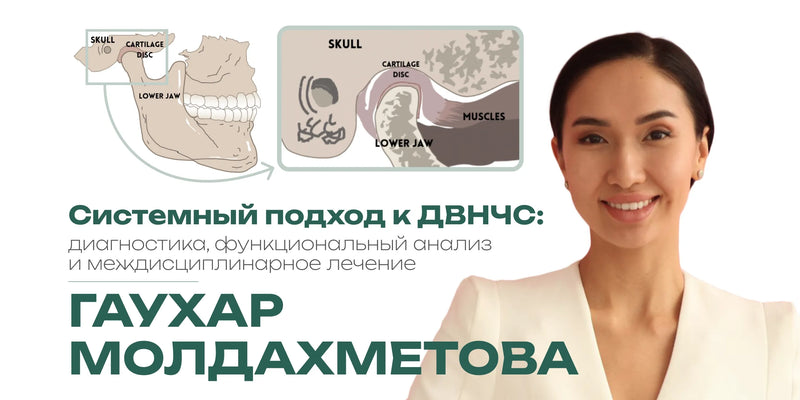
Systematic Approach to TMJ Dysfunction: Diagnosis, Functional Analysis and Interdisciplinary Treatment

Systematic Approach to TMJ Dysfunction: Diagnosis, Functional Analysis and Interdisciplinary Treatment

عن الكورس
كورس عملي مع Gauhar Moldahmetova عن نهج منظم لمشاكل الـ TMJ. يجمع المفهوم الـ Gnathological والـ Neuromuscular من أول استشارة لحد التأهيل الكامل.
مناسب لـ: أخصائي التقويم والـ Prosthodontist
شنو راح تتعلم:
- تشخيص الـ TMD بالطرق السريرية والأجهزة
- قراءة الـ CBCT والـ MRI والـ EMG والـ Axiography
- تحديد وتثبيت الوضع العلاجي للفك
- التحضير التقويمي والتأهيل التعويضي
Systematic Approach to TMJ Dysfunction: Diagnosis, Functional Analysis and Interdisciplinary Treatment
Course overview
This comprehensive practice-oriented course combines gnathological and neuromuscular approaches to the diagnosis and management of patients with temporomandibular joint dysfunction. The program is structured as a unified clinical algorithm — from the initial consultation and identification of dysfunction signs to functional stabilization, orthodontic preparation and comprehensive prosthetic rehabilitation.
During the course you will learn:
- Comprehensive diagnosis of TMD using gnathological, neuromuscular, clinical and instrumental approaches
- Interpretation of OPTG, CBCT, MRI, cephalometry, EMG and electronic axiography to assess the condition and function of the cranio-mandibular system
- Determination, stabilization and control of the therapeutic position of the mandible at various stages of treatment
- Differential diagnosis of complex TMJ pathologies and patient management tactics within an interdisciplinary approach
- Development of an individualized treatment plan taking into account orthodontic and prosthetic rehabilitation
- Analysis of complex clinical cases and integration of diagnostic data into a unified treatment protocol
- Analysis of complex clinical cases using EMG, axiography, CBCT, MRI and other diagnostic methods
- Principles of orthodontic preparation of patients with TMD for subsequent prosthetic treatment
- Strategy for functionally oriented planning of full-mouth dental rehabilitation
The course allows you to combine disparate diagnostic data into a single clinical system and build a sequential patient management strategy. From initial screening and determining the nature of the pathology to selecting the therapeutic mandibular position, orthodontic preparation and subsequent prosthetics — each stage is considered from the perspective of functional stability and interdisciplinary interaction.
- Integrate gnathological and neuromuscular findings to perform comprehensive clinical diagnostic evaluations for TMD.
- Interpret CBCT, MRI, OPTG, cephalometry, EMG and axiography data to inform functional mandibular assessment.
- Determine and stabilize a therapeutic mandibular position and design sequential treatment steps for rehabilitation.
- Develop interdisciplinary treatment plans coordinating orthodontic preparation and prosthetic rehabilitation for TMD patients.
What you will learn
Course lessons
Lesson 1. Diagnosis of TMJ pathologies: gnathological and neuromuscular approaches. Part 1
Overview of current literature on the diagnosis of TMJ pathologies: comparative analysis of gnathological and neuromuscular approaches.
Lesson 2. Diagnosis of TMJ pathologies: gnathological and neuromuscular approaches. Part 2
Successful dental treatment, whether large-scale prosthetics, orthodontics or full-mouth rehabilitation, is impossible without a stable and healthy foundation, which is the temporomandibular joint. This intensive practice-oriented lesson is designed to restructure the clinician's clinical thinking and provide a clear, step-by-step algorithm for managing patients suspected of TMD.
You will learn to integrate approaches from the gnathological and neuromuscular schools, master manual palpation skills and functional tests, and learn to read hidden markers of overload of the dentoalveolar system on OPTG, CBCT and cephalometric images.
- Review of specialized literature on the diagnosis of TMJ pathologies: comparative analysis of concepts (gnathological and neuromuscular schools)
- Definition of TMJ pathology: etiology, pathogenesis and clinical indications for treatment
- Strategy and tactics for the clinician upon initial detection of TMJ pathology signs
- Fundamental principles of comprehensive diagnosis for patients with TMD
- Methodology of functional diagnostics of the temporomandibular joint
- Algorithm for creating a comprehensive treatment and interdisciplinary rehabilitation plan
- Specialized patient questionnaires for TMD: identification of clinical "red flags"
- Clinical examination of the patient and assessment of the local status (Status localis)
- Objective signs of functional overload of the dentoalveolar system and TMJ structures
- Specifics of complaints, anamnesis collection protocol and assessment of the psycho-emotional status of a patient with TMD
- Execution and interpretation of functional loading tests
- Palpation protocol for masticatory muscles and TMJ elements
- Differential diagnosis of joint clicks: ligamentous hypermobility versus displacement of the articular disc
- Functional anatomy of the TMJ: detailed analysis of ligamentous architecture and muscle topography
- Basic static methods of instrumental examination of patients with TMD
- Orthopantomography (OPTG): key diagnostic markers
- Cone-beam computed tomography (CBCT): analysis of TMJ bony structures
- Cephalometry (cephalometric radiography): key indicators in the context of joint dysfunction
Lesson 3. TMJ and the masticatory system: comprehensive diagnostics before dental rehabilitation
The success of any large-scale dental intervention, whether total prosthetics, high-tech orthodontic treatment or correction of occlusal disorders, directly depends on the stability of the temporomandibular joint and the balance of the masticatory muscles. This advanced practice-oriented lesson is designed to completely restructure the clinician's clinical thinking.
The program combines leading global gnathological concepts with evidence-based medicine and protocols for manual, radiographic and MRI diagnostics. You will progress from initial screening of a patient with "red flags" to independent expert interpretation of studies and creation of a safe interdisciplinary rehabilitation plan.
- Fundamental concepts of diagnosis and treatment of TMJ pathologies within contemporary prosthetic dentistry and gnathology
- Comparative analysis of classical gnathological (occlusal), neuromuscular concepts and the philosophy of the John Kois Center: key clinical aspects
- Integration of the Natural Head Position (NHP) concept into the practice of the prosthodontist
- Mariano Rocabado's tri-centric concept: the interrelationship of the cervical spine, occlusion and the TMJ
- Biopsychosocial model in gnathology: accounting for psycho-emotional factors and central sensitization when treating TMD
- Official positions of international dental associations on the management of patients with TMJ pathologies: evidence-based medicine and a summarizing clinical conclusion
- Magnetic resonance imaging (MRI) of the TMJ as the gold standard of diagnosis: detailed interdisciplinary analysis
- Algorithm for MRI image analysis: assessment of the position, shape and structure of the articular disc dynamically
- Differential diagnosis of different types of TMJ dislocations
- Standardized gnathological photo protocol
Lesson 4. Neuromuscular diagnostics of the TMJ: EMG, axiography, TENS and digital analysis
When classic static images and manual tests are insufficient, objective digital technologies and functional dynamics come to the clinician's aid. This advanced lesson is devoted to a deep dive into neuromuscular dentistry and biometric analysis of the cranio-mandibular system.
You will learn to "listen" to the patient's muscles using electromyography, digitize individual joint movements on an axiograph and use TENS therapy to erase pathological muscle memory.
The course will give clear answers to questions on how to manage gnathology patients during orthodontic treatment, how to manage bruxism and tooth wear, and when the dentist should refer the patient to related specialists to achieve a stable result.
- Interdisciplinary approach: criteria and referral protocols to related specialists
- Comprehensive clinical case: detailed analysis of diagnostic stages and total rehabilitation of a patient using an interdisciplinary approach
- Additional dynamic and functional research methods for patients with TMD
- Electromyography (EMG) of masticatory muscles: objective assessment of the muscle-functional balance of the cranio-mandibular system
- Clinical indications, methodology, analysis and interpretation of graphical and digital EMG data
- Neuromuscular variations: hypertonicity, hypotonicity and protocol for deprogramming TMJ muscles
- Pathological and physiological tooth wear: differential diagnosis, occlusal and joint consequences
- Bruxism as a complex psychosomatic phenomenon and a mechanism of central nervous system adaptation to stress
- Transcutaneous electrical nerve stimulation (TENS therapy) in comprehensive treatment of TMD
- Electronic axiography (condylography): high-precision registration and evaluation of dynamic trajectories of mandibular movements
- Specifics and features of gnathological diagnostics for patients undergoing orthodontic treatment (bracket systems, aligners)
- Analysis of complex clinical cases
- Comprehensive digital analysis: integration of EMG, axiography and CBCT/MRI data in specialized software for precision treatment planning
- Relationship between morphofunctional features of the muscular system and clinical manifestations of muscle dysfunction
- Review of current scientific literature and evidence base in the context of various global concepts
Lesson 5. Complex patients in gnathology: clinical cases and treatment tactics
In the practice of every gnathologist, prosthodontist and orthodontist there are patients for whom standard treatment protocols not only do not work but may worsen the situation. Patients with dysplasia, fibromyalgia or progressive destruction of the TMJ heads require expert-level differential diagnosis from the clinician. This lesson is entirely built on intensive analysis of real, well-documented clinical cases.
No dry theory — only practical cases. You will study clinical cases and management of patients with systemic, neurological and destructive joint pathologies. Each case history is supported by robust digital data: EMG graphs "before/after", axiograph trajectories and 3D tomograms of bony changes, allowing you to see objective biometric markers of pathology and recovery.
- Comprehensive clinical analysis: management of a patient with connective tissue dysplasia. Features of a combined biometric protocol (electromyography, electronic axiography, CBCT)
- Comprehensive clinical analysis: management of a patient with fibromyalgia and chronic pain syndrome. Comparative analysis of EMG indicators before and after therapy
- Comprehensive clinical analysis: rehabilitation of a patient with chronic muscle and headache pain after maxillofacial surgery (MFS). Dynamic EMG monitoring during treatment
- Comprehensive clinical analysis: treatment tactics for a patient with an open bite and pronounced asymmetrical TMJ arthrosis. Verification of results at stages using CBCT, axiography and EMG
- Comprehensive clinical analysis: destructive forms of TMJ involvement. Monitoring a patient with progressive osteoarthritis (analysis of CBCT and axiography)
- Comprehensive clinical analysis: specifics of managing a patient with progressive osteoarthritis and limited mouth opening
- Comprehensive clinical analysis: prosthetic and gnathological rehabilitation of a patient with advanced deforming TMJ arthrosis. Full screening (OPTG, CBCT, cephalometry, electronic axiography)
- Biometric patterns: specific manifestations of muscle pathologies and myofascial pain syndrome on axiogram and myogram graphs
Lesson 6. Initial consultation and construction of the patient's "roadmap" with TMD
- Implementation of the interdisciplinary approach at the initial appointment: delineation of areas of responsibility
- General concepts, medical standards and deontology in patient management
- Finding a stable therapeutic position of the mandible and protocols for its continuous monitoring at all stages of rehabilitation
- Determination of the nature of TMJ pathology, differential diagnosis and formulation of indications for treatment
- Strategy and tactics for the clinician upon initial detection of dysfunction signs
- Comprehensive interdisciplinary analysis: integration of radiographic screening data (OPTG, CBCT, cephalometry), soft tissue imaging (MRI), clinical examination and functional dynamic tests
- Algorithm for analysis of static research methods: expert palpation, manual examination, analysis of biometric parameters of individual plaster models and digital intraoral scans
- Synthesis of diagnostic data (Examination / Palpation / Scan / OPTG / MRI / CBCT / Cephalometry) to create a predictable, phased interdisciplinary treatment plan
Lesson 7. TMD and orthodontic treatment: diagnostics, prognosis and preparation for prosthetics
The main mistake of many specialists is the attempt to start orthodontic tooth movement or full-mouth prosthetics before the functional position of the mandible has been found and stabilized. This lesson is intended to teach you to unerringly read radiographic and digital puzzles, see hidden traps in CAD modeling programs and create durable interdisciplinary treatment plans.
You will thoroughly analyze the radiographic anatomy of the TMJ on OPTG and CBCT, learn to predict the complexity of orthodontic movement based on the therapeutic mandibular position and receive a clear, step-by-step protocol for preparing dental arches for fixation of ideal prosthetic constructions.
- Designing and creating a preliminary comprehensive rehabilitation plan based on static research methods (clinical examination, palpation, biometric diagnostic model measurements, intraoral scanning, OPTG, MRI, CBCT, cephalometry)
- Diagnosis: differential analysis of OPTG with intact TMJ structures (without visible bony pathology)
- Diagnosis: verification of TMJ pathologies on OPTG (arthroses, degenerative-dystrophic changes)
- Radiographic markers of transverse maxillary macrognathia (narrowing) on OPTG
- Cephalometric analysis (cephalometry) as a tool for preliminary selection of orthodontic appliance (bracket systems vs. aligners)
- Interdisciplinary clinical analysis: in-depth comparative analysis of OPTG, CBCT and MRI data of a single patient
- Main points of CBCT analysis of the temporomandibular joint
- Digital errors in the CAD environment (using Exocad as an example): critical analysis of inaccuracies when matching scans and CBCT
- Dynamic control: methods for assessing TMJ stability after movements
- "Expectation vs. Reality": algorithm for creating primary and alternative treatment plans. Criteria for involving related specialists
- Finding the therapeutic mandibular position: indications for additional dynamic diagnostics (electromyography, electronic axiography, condylography)
- Predicting the complexity and duration of orthodontic treatment depending on the identified therapeutic mandibular position
- Differential diagnosis and clinical criteria: when orthodontic treatment can be started directly, without prior splint therapy
- Expert analysis of clinical cases: specifics of orthodontic preparation of a patient for subsequent full-mouth prosthetics
- Strategic tasks of pre-prosthetic orthodontic preparation
- Occlusion biomechanics: principles of correct distribution of masticatory load and creating functional stability of the dentoalveolar system
أسئلة شائعة عن الكورس
من محاضر الكورس؟
الكورس مقدم من: Gauhar Moldahmetova
كم مدة الكورس وكم درس فيه؟
الكورس يتكون من 7 درس، ومدته الكلية 10 ساعة و43 دقيقة.
هل الكورس كامل أو مجرد فيديوهات من يوتيوب؟
الكورس اشتراك كامل بكل الدروس المذكورة بالوصف (7 درس)، وليس فيديوهات يوتيوب أو مقاطع متفرقة.
متى يتفعّل الكورس بعد الدفع؟
التفعيل فوري خلال دقائق من إتمام الدفع في أغلب الحالات، وتوصلك رسالة على البريد الإلكتروني بكل تفاصيل التفعيل.
ما هي طرق الدفع المتوفرة؟
للأطباء داخل العراق: زين كاش، سوبر كي (ماستر الرافدين)، FIB أو رصيد آسيا سيل.
للأطباء خارج العراق: البطاقة البنكية، أو طرق دفع محلية في بعض الدول مثل مصر والجزائر وفلسطين وغيرها.
هل الدفع آمن؟
نعم، جميع عمليات الدفع محمية عبر بروتوكولات أمان SSL.
إذا صارت عندي مشكلة بالتفعيل، شنو الحل؟
فريق الدعم متواجد عبر واتساب أو تليغرام أو البريد الإلكتروني support@dentalcourse.store. وإذا كانت المشكلة بالتفعيل أو خلل من طرفنا، نستبدل لك الكورس.


