


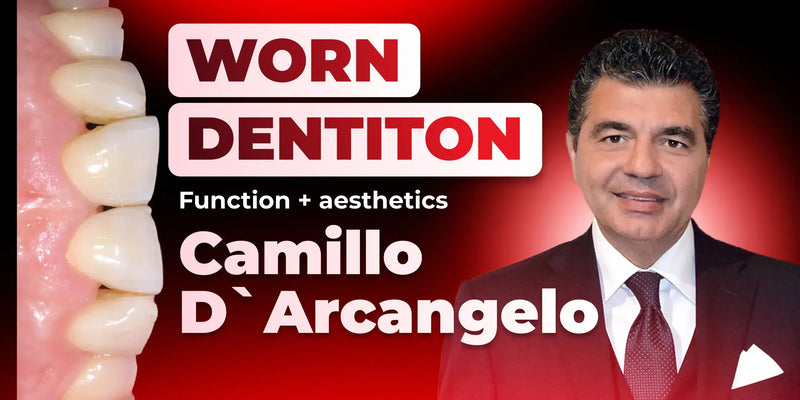

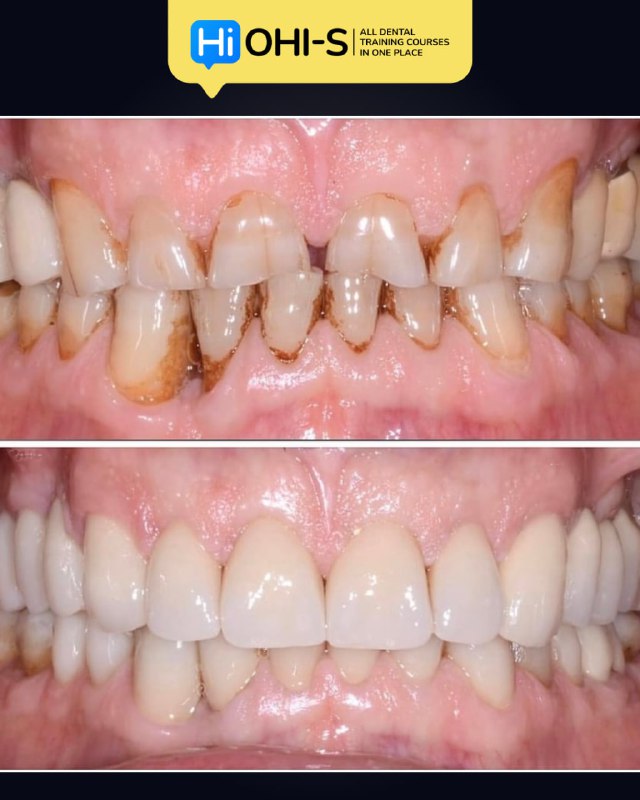
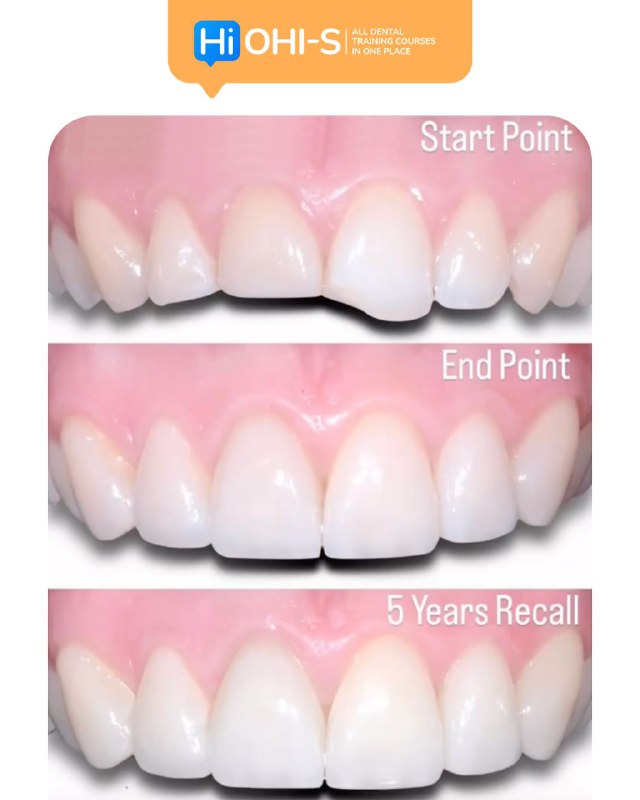
Treatment of pathological tooth wear. Additive prosthodontics. The concept «Aesthetics-Function-Posture»

Treatment of pathological tooth wear. Additive prosthodontics. The concept «Aesthetics-Function-Posture»

عن الكورس
كورس Camillo D'Arcangelo عن علاج الـ Pathological Tooth Wear بمفهوم Aesthetics-Function-Posture. يمشي من التشخيص الوظيفي لحد التأهيل الجمالي بالـ Indirect Restorations.
مناسب لـ: الـ Prosthodontist وأخصائي الـ Functional Dentistry.
شنو راح تتعلم:
- مفهوم الـ Additive Restoration
- التحضير الـ Minimally Invasive للـ Veneers والـ Onlay والـ Overlay
- علاج الـ Parafunction والأسنان المتآكلة
- التأهيل ويه مشاكل الـ Musculoskeletal
Treatment of pathological tooth wear. Additive prosthodontics. The concept «Aesthetics-Function-Posture»
Course overview
This course is a gradual review of medical manipulations on patients with functional deviations:
diagnostics
consideration of postural aspects
functional treatment
final result: aesthetic rehabilitation by indirect restorations.
During the 10 webinars, the lecturer will talk about treatment of complex cases of patients with functional deviations (bruxism, severe form of pathological tooth wear), who will receive full rehabilitation, from functional diagnostics to ideal ceramic restorations.
Course lessons
Lesson 1. The concept of additive restoration techniques
Esthetic guidelines for restoration
Traditional and additive approaches to aesthetic restoration: indications
Types of materials for aesthetic restoration and indications for their use
Features of the choice of the concept of aesthetic restoration
Advantages of the additive concept
Tasks of aesthetic treatment
Indications for dental restoration with and without preparation
Hyper-contouring: the subtleties of planning aesthetic restoration
Determining the optimal thickness of the veneer
Mock-up in aesthetic restoration
The concept of aesthetics of the gingival margin
Feldspathic porcelain, composites, lithium disilicate: advantages and disadvantages
Aspects of marginal stability
The stages of fixing veneers: subtleties and recommendations.
Lesson 2. Minimal invasive preparation for veneers
Aesthetics in dentistry: the superiority of a smile
Indications for preparation of teeth for various restoration
Principles of dental preparation
Supragingival line: optimal position for aesthetic restoration
Mock-up and Wax-up in the production of aesthetic restoration
New minimal preparation technique
Stages and the rules of the classic preparation
Impressions: materials and recommendations
Features of preparation at the level of the gingival margin
Ceramics and lithium disilicate: advantages and disadvantages
Composites: indications for use
Occlusal rehabilitation using lithium disilicate veneers
Composite veneers for parafunction
Fiberglass pins for aesthetic restoration
Adhesive protocol: features of working with enamel
Stages of cementation of veneers
Teeth bleaching before making veneers.
Lesson 3. Occlusion and occlusal balance of the lateral group of teeth
Modern principles of occlusion
Materials for the restoration of the occlusal surface: selection criteria
Biomechanical aspects of posterior tooth restoration
Physiological features of tooth tissues when choosing a material for restoration
The concept of occlusal balance: the basic principle
Composites for total rehabilitation of posterior teeth
Changing occlusion using temporary restoration of the posterior teeth
Methods of treatment of dysfunction
Additive concept in occlusion recovery
Fixed occlusal splints and protective mouthguards: characteristics
E. max: types and mechanical features
Features of preparation of posterior teeth
Stamp technique: principle and advantages
Pastoral benefits: clinical examples
BioFunction Enamel: mechanical and biomechanical properties.
Lesson 4. Minimal Invasive preparation for Overlay and Onlay
The basic principles of preparation
Materials for the restoration of the posterior group of teeth: advantages and disadvantages
Biomechanical aspects of posterior tooth restoration
Composite or ceramic: material selection criteria
Indications for direct and indirect restoration
Basic rules and principles of preparation of posterior teeth
Additive approach in the restoration of posterior teeth
Partial preparation: indications and rules for creating a cavity
The concept of biologic width
Cavity edge relocation: advantages and disadvantages
Elimination of undercuts: Build-up concept
New in minimal preparation
CAD/CAM technologies: features of application in aesthetic restoration
Impressions taking: recommendations for getting an accurate impression
Laboratory stages of the production of linings
Stamp technique: Advantages
Cementation: the processing stages of a cavity with the use of different materials
Problems of indirect composite restoration
Composites for cementing: comparative characteristics.
Lesson 5. Rehabilitation of patients with worn dentition
The main causes of tooth abrasion
Occlusal balance in restoring function and aesthetics
Changing the canine guide using an additive technique
Diagnosis of оcclusal disorders: features
Asymptomatic occlusal disorders: treatment methods
Physiological aspects of the condyle position
CBCT and MRI: advantages and disadvantages
Stages of treatment of patients with occlusal and aesthetic disorders
VDO incrementation: basic rules
Removable or non-removable occlusal splints: advantages and disadvantages
Range of rotation: the specificity of the parameter
Deprogramming of muscles: rehabilitation using an additive technique
Features of temporary splinting
Materials for the restoration: selection criteria
Indications for occlusal veneers
Gold-composite crowns on implants.
Lesson 6. Parafunction and worn dentition: methods of treatment
What is parafunction?
Erasability of teeth: types, causes, methods of treatment
Methods of rehabilitation of patients with occlusive disorders
The vertical dimension of occlusion: to determine the required height
Physiological aspects of mandibular movement
Determination of the condyle position: CBCT and MRI
Timing of the formation of muscle memory
Increasing the height of the bite: an adhesive technique
Palatal veneers: manufacturing principles
Methods of restoration with preparation of teeth
Protective mouthguards: biomechanical aspects of use
Treatment of patients with occlusion disorders: a step-by-step protocol
Veneers or crowns: biomechanical justification for the choice.
Lesson 7. Aesthetic and occlusal rehabilitation of patients with teeth wear and asymptomatic occlusal disorders
Diagnosis: basic principles of diagnosis
Stages of diagnosis of asymptomatic patients
Palpation of muscles: methods and rules
Clinical stages of treatment
Photoprotocol in the treatment
Diagnosis of disorders by CBCT and MRI: anatomical aspects
Physiological and pathological position of the condyle and articular disc
Palpation of the TMJ: the traditional method and palpation through the auditory canal
Increasing the vertical dimencion without changing the position of the condyle: technique
Cancellation of muscle memory: prosthetic aspects
The methodology for the fabrication of temporary occlusion splints
Rehabilitation of patients with the use of additive prosthetics
Occlusal veneers: indications for use.
Lesson 8. Additive prosthetics in the treatment of patients with parafunction: practical tips
The concept of additive prosthetics: indications and benefits
Restorations with minimal preparation and without preparation: advantages and disadvantages
Hyper-contouring: a geometric concept
The concept of occlusal balance
Determining the point of greatest convexity
Palatal veneers: indications
Materials for the restoration: selection criteria
The method of using occlusal splints in the restoration of teeth in patients with parafunction
Gold-composite crowns on implants: indications and subtleties of use
Composites and lithium disilicate for the restoration of posterior teeth: indications and benefits.
Lesson 9. Aesthetic and occlusal rehabilitation of patients with musculoskeletal dysfunctions: diagnosis and treatment principles
EFP - concept: the main provisions
Diagnostics: principles and stages
Aesthetic rehabilitation with preservation of occlusal balance: principles
Method of bite registration
TMJ: anatomical and physiological aspects
Patients with symptoms of musculoskeletal dysfunction: criteria for inclusion in the group
Clinical stages of treatment
Methods of examination of the patient
Evaluation of treatment outcomes: diagnostic models and photos
Muscle palpation: techniques and features of palpation of individual muscles
Palpation of the TMJ through the auditory canal: methods and benefits
Postural tests: criteria for evaluating pastura at the treatment stages
Method of recording the new position of the lower jaw
Treatment of asymptomatic patients and patients with symptoms of musculoskeletal dysfunction: principles and differences.
Lesson 10. Asthetic and occlusal rehabilitation of patients with musculoskeletal dysfunction: clinical examples
Diagnosis and treatment planning: key aspects
Stages of diagnosis of musculoskeletal disorders
Survey methods: objective and reproducible
Intraoral examination: rules and recommendations
Muscle palpation: demonstration of the technique
Pastoral tests: methods of conducting
MRI: determination of the condyle position
Use of occlusal splints: methods and terms of treatment
Additive prosthetics for occlusal rehabilitation
Asymmetrically positioned occlusal splints: indications
Principles of mandibular displacement: biomechanical aspects.
أسئلة شائعة عن الكورس
من محاضر الكورس؟
الكورس مقدم من: Camillo D'Arcangelo
كم مدة الكورس وكم درس فيه؟
الكورس يتكون من 10 درس، ومدته الكلية 19 ساعة و36 دقيقة.
هل الكورس كامل أو مجرد فيديوهات من يوتيوب؟
الكورس اشتراك كامل بكل الدروس المذكورة بالوصف (10 درس)، وليس فيديوهات يوتيوب أو مقاطع متفرقة.
متى يتفعّل الكورس بعد الدفع؟
التفعيل فوري خلال دقائق من إتمام الدفع في أغلب الحالات، وتوصلك رسالة على البريد الإلكتروني بكل تفاصيل التفعيل.
ما هي طرق الدفع المتوفرة؟
للأطباء داخل العراق: زين كاش، سوبر كي (ماستر الرافدين)، FIB أو رصيد آسيا سيل.
للأطباء خارج العراق: البطاقة البنكية، أو طرق دفع محلية في بعض الدول مثل مصر والجزائر وفلسطين وغيرها.
هل الدفع آمن؟
نعم، جميع عمليات الدفع محمية عبر بروتوكولات أمان SSL.
إذا صارت عندي مشكلة بالتفعيل، شنو الحل؟
فريق الدعم متواجد عبر واتساب أو تليغرام أو البريد الإلكتروني support@dentalcourse.store. وإذا كانت المشكلة بالتفعيل أو خلل من طرفنا، نستبدل لك الكورس.


