


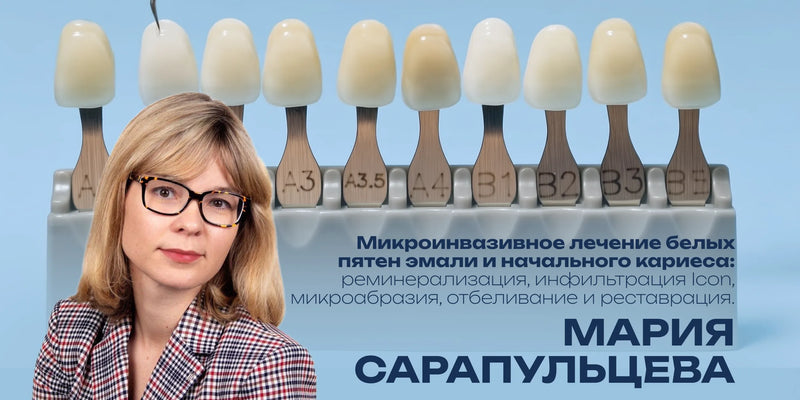
Microinvasive treatment of white enamel spots and early caries: remineralization, Icon infiltration, microabrasion, whitening, and restoration.

Microinvasive treatment of white enamel spots and early caries: remineralization, Icon infiltration, microabrasion, whitening, and restoration.

عن الكورس
كورس مع Mariya Sarapultseva عن العلاج طفيف التوغل للبقع البيضاء والتسوس المبكر. نهج شامل من التشخيص لحد اختيار العلاج.
مناسب لـ: طبيب الأسنان العام وطبيب أسنان الأطفال
شنو راح تتعلم:
- أسباب البقع البيضاء والتشخيص التفريقي
- الـ Remineralization والـ Icon Infiltration
- الـ Microabrasion والتبييض
- خوارزمية اختيار العلاج لحد الترميم
Microinvasive treatment of white spot enamel lesions and early caries: remineralization, Icon infiltration, microabrasion, whitening, and restoration.
Course overview
White spot enamel lesions are a common clinical problem that can be a manifestation of early caries, a result of orthodontic treatment, or the outcome of disturbances in enamel formation and mineralization. To choose the correct treatment approach, it is important not only to determine the cause of the lesion but also to assess its activity, depth, and morphological features.
The course by Mariya Sarapultseva is devoted to a comprehensive approach to the diagnosis and microinvasive treatment of white spot enamel lesions and early caries. You will analyze the pathophysiology of lesions, principles of differential diagnosis, and a clinical algorithm for treatment selection—from conservative methods to restoration.
Within the course you will study:
Pathophysiology of early caries and the mechanism of white spot enamel lesion formation
Morphological classification of white spots and their differential diagnosis
Differences between carious and non-carious enamel lesions, including post-orthodontic white spots, fluorosis, hypomineralization of molars and incisors (MIH) and hypoplasia
Indications and limitations of remineralization therapy
Icon infiltration for non-cavitated enamel lesions
Microabrasion and whitening as methods of correcting aesthetic defects
Indications for restoration for structural enamel defects
Clinical algorithm for selecting the most gentle and predictable treatment method.
The course will help systematize the approach to white spot enamel lesions, improve diagnostic accuracy, and choose the optimal treatment tactics while preserving as much healthy tooth structure as possible.
Course lessons
Lesson 1. Clinical algorithm of microinvasive treatment of white spot enamel lesions: remineralization, Icon infiltration, microabrasion, whitening, and restoration
Principle of minimal invasiveness:
Control of lesion activity
Remineralization therapy
Icon infiltration
Microabrasion
Whitening
Restoration when structural defects are present.
Indications for different treatment methods:
Rem therapy
Icon infiltration
Microabrasion
Whitening
Early caries
Post-orthodontic WSLs
Fluorosis
MIH
Hypoplasia.
Limitations of microinvasive techniques:
Deep defect
Dense defect
Hypoplastic defect
Presence of a cavity
Post-eruptive enamel breakdown
Indications to transition to a composite restoration.
Decision tree for the clinician: how, based on diagnosis, lesion activity, age-related features and aesthetic requirements, to choose the most gentle yet clinically and aesthetically predictable treatment method
Typical mistakes and prognosis of treatment:
Mistakes in indication selection
Formulating a realistic prognosis for the patient
Full or partial effect
Possible need for combined treatment
Clinical thinking without claims to legal expertise.
Lesson 2. White spot enamel lesions and early caries: pathophysiology, morphological classification, and Icon's role in microinvasive dentistry
White spot enamel lesions (white spot lesions) as an early clinical marker:
Carious and non-carious lesions
Association with orthodontic treatment
Mineralization and enamel formation disturbances
Pathophysiology of initial caries without a cavity
Balance of demineralization and remineralization
Role of the biofilm
Subsurface porosity
Difference from classic carious cavity.
Morphological classification of white spots:
Demineralization
Hypomineralization
Hypoplastic
Correspondence to clinical diagnoses
Caries
Post-orthodontic white spots (WSLs)
Fluorosis
Hypomineralization of molars and incisors (MIH)
Hypoplasia.
Differential diagnosis of carious and non-carious white spots
Icon as one of the tools in microinvasive dentistry
Place of microinvasive approaches in the modern strategy of preserving dental tissues:
Remineralization
Infiltration
Limited microabrasion
Improving aesthetics without aggressive tooth prep.
Lesson 3. White spot enamel lesions and early caries: pathophysiology, diagnosis, and clinical significance
White spot enamel lesions (white spot lesions) as an early clinical marker:
Carious and non-carious lesions
Association with orthodontic treatment
Mineralization and enamel formation disturbances
Pathophysiology of early caries without a cavity
Balance of demineralization and remineralization
Role of the biofilm
Subsurface porosity
Difference from classic carious cavity.
أسئلة شائعة عن الكورس
من محاضر الكورس؟
الكورس مقدم من: Mariya Sarapultseva
كم مدة الكورس وكم درس فيه؟
الكورس يتكون من 3 درس، ومدته الكلية 2 ساعة و28 دقيقة.
هل الكورس كامل أو مجرد فيديوهات من يوتيوب؟
الكورس اشتراك كامل بكل الدروس المذكورة بالوصف (3 درس)، وليس فيديوهات يوتيوب أو مقاطع متفرقة.
متى يتفعّل الكورس بعد الدفع؟
التفعيل فوري خلال دقائق من إتمام الدفع في أغلب الحالات، وتوصلك رسالة على البريد الإلكتروني بكل تفاصيل التفعيل.
ما هي طرق الدفع المتوفرة؟
للأطباء داخل العراق: زين كاش، سوبر كي (ماستر الرافدين)، FIB أو رصيد آسيا سيل.
للأطباء خارج العراق: البطاقة البنكية، أو طرق دفع محلية في بعض الدول مثل مصر والجزائر وفلسطين وغيرها.
هل الدفع آمن؟
نعم، جميع عمليات الدفع محمية عبر بروتوكولات أمان SSL.
إذا صارت عندي مشكلة بالتفعيل، شنو الحل؟
فريق الدعم متواجد عبر واتساب أو تليغرام أو البريد الإلكتروني support@dentalcourse.store. وإذا كانت المشكلة بالتفعيل أو خلل من طرفنا، نستبدل لك الكورس.


